History of Popular Culture: Oscar Micheaux and the Invention of African-American Cinema
By Anonymous
Most American film histories still begin with D.W. Griffith’s The Birth of a Nation - an openly white supremacist 1915 epic that turned cinematic spectacle into a national event while glorifying the Ku Klux Klan. In contrast, between 1919 and 1948 Oscar Micheaux wrote, directed, and produced roughly forty feature films for Black audiences, making him the most prolific Black independent filmmaker of the race-movie era and, in many respects, the architect of African-American cinema as a distinct cultural formation. Micheaux did not start as a filmmaker. Born in 1884, he worked as a Pullman porter and then as a homesteader in South Dakota before turning his experiences into fiction.
His 1913 novel The Conquest: The Story of a Negro Pioneer and his 1917 novel The Homesteader chronicled Black life on the Great Plains and attracted the interest of the Lincoln Motion Picture Company, an early Black-owned studio. When its founders proposed to buy film rights to The Homesteader, Micheaux refused to surrender control and instead raised capital himself, eventually shooting an eight-reel feature in Chicago in 1919. That film, also titled The Homesteader, is widely regarded as the first feature-length narrative film made by an African-American director. The significance of this move is easy to miss if we treat it as a biographical anecdote rather than as a structural intervention in popular culture. In a period when Hollywood either excluded Black performers or confined them to caricatured roles, Micheaux built an alternative production and distribution apparatus. He financed his films through direct appeals to Black investors, worked with Black theater owners to book screenings, and marketed directly to Black audiences across the United States. His work belonged to what were then called “race films”—movies made by and for African Americans—but his ambition was never simply to provide entertainment for a segregated market niche. He wanted to use film to rebut white supremacist narratives and to stage debates within Black communities themselves.
The clearest example is Within Our Gates (1920), produced just five years after The Birth of a Nation and often read as its deliberate counter-narrative. Where Griffith depicted Reconstruction as a nightmare of Black predation and white victimhood, Micheaux’s film portrays lynching, attempted rape, and racial terror carried out by white mobs against Black families. It centers on Sylvia Landry, a Black woman trying to raise funds for a Southern school and includes flashback sequences that expose both racial violence and sexual exploitation under Jim Crow. As film historian Gerald Butters notes, Micheaux’s women—characters like Sylvia Landry and Eve Mason—are placed at the psychological and political center of his stories, bearing the weight of racial injustice while also articulating hopes for uplift and autonomy. This narrative choice matters because it runs directly against the grain of mainstream popular culture in the 1910s and 1920s. Hollywood frequently portrayed Black women as comic servants, hypersexualized threats, or invisible background figures. Micheaux instead wrote them as protagonists negotiating colorism, class aspiration, sexual danger, and moral compromise inside Black communities as well as in relation to white power. That double focus—on external oppression and internal tension—gave his films a complexity that made both white censors and some Black critics uncomfortable. He was willing to show corruption among Black clergy, conflicts between light- and dark-skinned characters, and the painful compromises demanded by migration and urban life.
Micheaux’s films also mark an early attempt to appropriate and repurpose the genres of American popular cinema. He produced melodramas, crime films, and social problem pictures. He used these forms to treat lynching, peonage, racial passing, and mob violence as central subject matter rather than as peripheral “issues.” Within Our Gates and later works such as Body and Soul (1925)—which helped launch Paul Robeson’s screen career—combine sensational plot devices with pointed commentary on religious hypocrisy, racialized policing, and economic exploitation. He was, in other words, not simply “adding Black characters” to existing Hollywood genres. He was re-writing what those genres could be about.
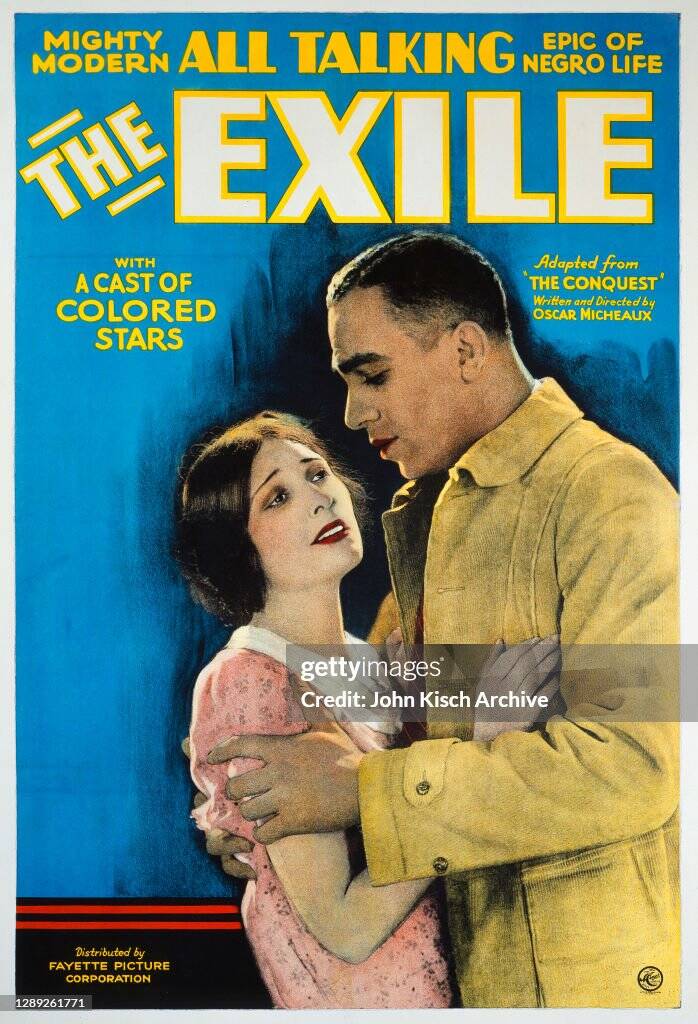
From the standpoint of popular culture history, Micheaux’s race films did three things at once. First, they created a visual record of early twentieth-century Black life that refused both plantation nostalgia and urban pathology. Second, they challenged the broader American film industry by exposing how powerfully cinema could shape racial perception—an intervention that becomes especially clear when Within Our Gates is set against The Birth of a Nation. Third, they offered African-American audiences the rare chance to see themselves on screen as complex, contradictory, and socially differentiated subjects rather than as a single stereotype. This last point is crucial - viz., Micheaux’s films featured professionals and laborers, migrants and small-town residents, light- and dark-skinned characters, strivers, hustlers, and moralists. That range, however imperfect, helped establish a template for later Black filmmakers navigating between politics, commerce, and representation. Micheaux is also significant because he survived a technical transition that destroyed many small operations. The arrival of synchronized sound in the late 1920s made filmmaking more expensive and drove many Black producers out of the industry. Micheaux, operating with limited resources, nonetheless managed to release talking features such as The Exile (1931), often cited as the first sound feature directed by an African American. He continued working into the late 1940s, long enough to see Hollywood begin, haltingly, to experiment with less caricatured Black roles, even as segregation and discrimination persisted in the industry.
If we place Micheaux back into the history of American popular culture, he appears less as an isolated pioneer and more as the central figure in an early public sphere built around cinema. His films circulated through segregated theaters and midnight shows, participated in debates about respectability and protest, and gave African-American audiences the chance to argue with one another about what kinds of stories should represent them on screen. Later movements—from the L.A. Rebellion filmmakers of the 1970s to contemporary Black independent cinema—inherit that problem as much as they inherit Micheaux’s example. The question is not only how to get a film made, but how to use the medium to renegotiate who gets seen, how, and on whose terms. In this sense, Micheaux’s legacy is less about being the first and more about showing what happens when a marginalized community seizes a mass medium at the height of its formative power. His work reminds us that popular culture is not simply a mirror of social reality. It is also a contested field in which communities argue about themselves in public, using the technologies—and the genres—available to them.
Questions for reflection
- How does reading Within Our Gates against The Birth of a Nation change the usual story we tell about the origins of American cinema?
- In what ways did Micheaux’s independent production and distribution network function as a “counter-public sphere” for Black audiences under Jim Crow?
- What are the risks and advantages of Micheaux’s choice to depict both external racial violence and internal conflicts within Black communities in the same films?
- How do Micheaux’s portrayals of Black women complicate dominant images of Black femininity in early twentieth-century popular culture?
- To what extent did Micheaux reshape existing film genres (melodrama, crime, social problem pictures) rather than simply inserting Black characters into them?
- How might contemporary Black independent filmmakers still be negotiating the same tensions Micheaux faced between commerce, representation, and political critique?
- What does Micheaux’s survival of the transition to sound suggest about the relationship between technological change and access to cultural production?
- If popular culture is “a contested field in which communities argue about themselves in public,” what arguments about African-American life and respectability do Micheaux’s films seem most intent on staging?
Further Reading:
Butters, G. (2013). Oscar Micheaux and his circle: African-American
filmmaking and race cinema of the silent period. University of Indiana Press.
Brown, M. (2021). Call and response: The narrative politics of precedent and structure in Oscar
Micheaux’s Within Our Gates. Black Camera, 12(2), 152–177.
Carroll, N. (2005). Aesthetic response and the case of Oscar Micheaux.
The Journal of Aesthetics and Art Criticism, 63(4), 327–338.
Brundage, W. F. (Ed.). (2010). The secret life of Oscar Micheaux: Race films, contested histories,
and twentieth-century America. University of North Carolina Press.